Directory
Suppliers
-
Website
Bovik Organic Farm in Tammisaari, Raseborg, focuses on native livestock breeds – Finnsheep and Eastern Finncattle. It’s the largest regenerative farm in Uusimaa to raise animals on pasture, with their grazing helping maintain the region’s biodiversity and landscapes. Animals are raised for meat, and in winter they are fed organic feed and fodder. The farm also makes use of Finnsheep fur, turning it into yarn and hides.
-
Website
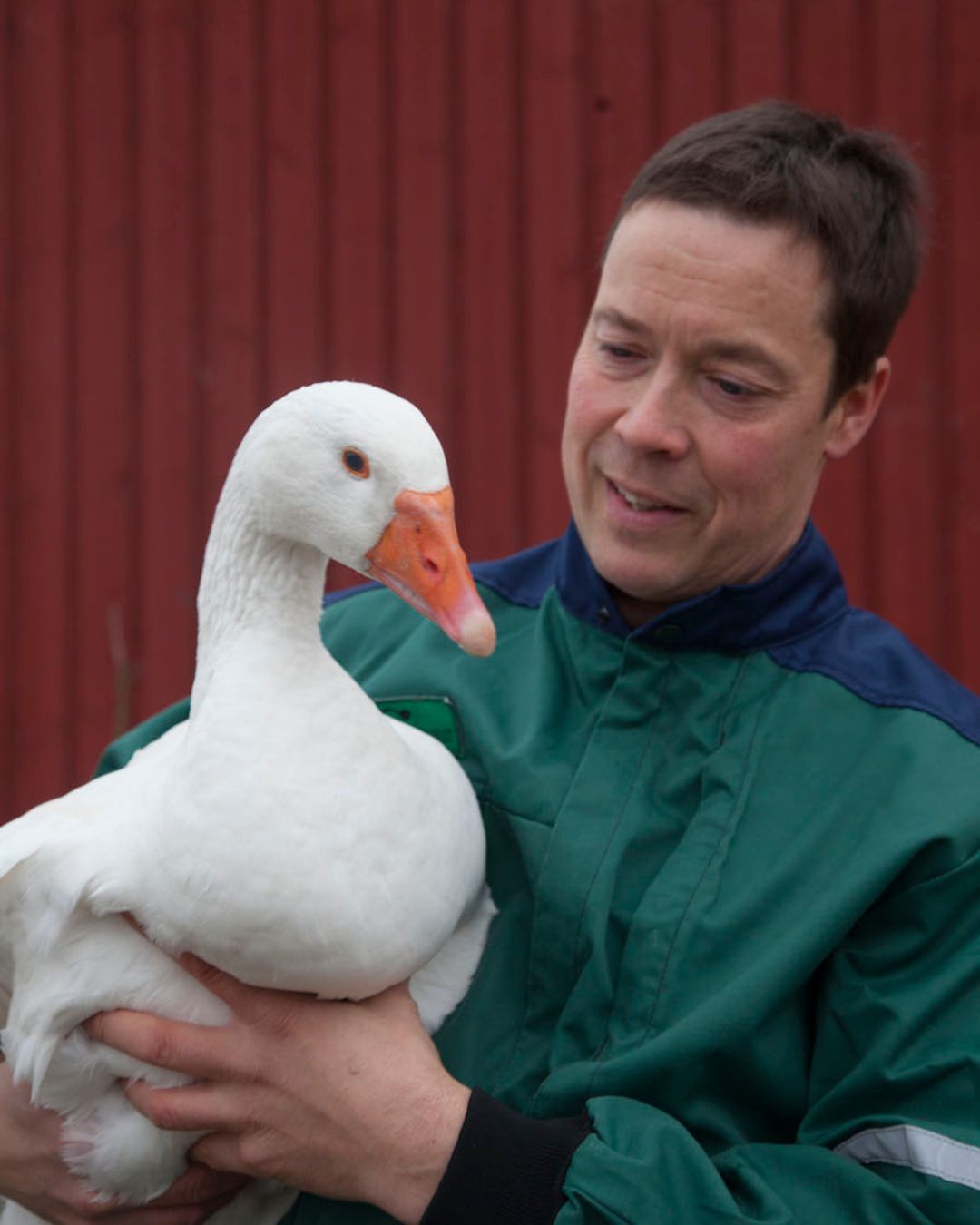
Hauhala Goose Farm, in Anttola, is one of the largest goose farms in Finland. Everything happens on site, from hatching the chicks to slaughter and processing into pâtés and canned goods, so the geese are never transported. The farm’s 11 hectares are used for pasture and to grow their own fodder. Nothing goes to waste: blood and fat are fully utilised in the kitchen, and feathers are turned into pillows and blankets locally in Riihimäki.
-
Website
Hongola Gård, owned by the Furuhjelm family, is an organic livestock farm in Urjala. The farm has reared cattle for over 300 years on the estate’s forest pastures, and still today the cows are permitted to move around these areas freely between spring and autumn. In 2017 the family introduced Black Angus cows, a Scottish breed, which are fed only naturally grown field grass. That means that the meat is formally classified as “grass-fed beef”. The farmhouse itself dates back to the 1600s, and is said to have inspired the Under the North Star trilogy by Väinö Linna, whose mother worked in the house. Hongola Gård hosts an annual harvest festival with local artisans and producers open for visitors.
-
Website
A family farm raising pigs since the 1960s, Kiven Säästöpossu handles everything on site – from growing the feed to caring for the animals and butchery. The pigs eat organic grains and legumes grown on the farm, with no soy or fish flour, and in summer they roam freely in the garden. Visitors are always welcome to come and meet them. Keeping the process entirely on the farm lets the team ensure the pigs are well cared for, with an ethical and transparent approach from start to finish.
-
Sakura Oü is a quince orchard in Päka, Estonia, run by farmer Lehari Järg. Most of the work is done by Lehari himself, with one or two extra hands helping out during the summer months. Each quince is picked by hand. The orchard is managed with a light touch. Outside of the early growing season and harvest, the trees require little intervention. Young trees are supported with organic fertiliser made from chicken manure — a simple method that, according to Lehari, works like a charm.
-
Website
Tukkutorin Kala, in Helsinki, is a fishmonger, café-restaurant, and wholesale seller founded in 2016 by fish expert Karl “Kala-Kalle” Huttunen. Most of their products come from local Finnish fishermen, with a few carefully selected items from overseas. They offer a wide range of fresh fish, shellfish, roe, and cured or smoked products, with their own smoker fed with alder. The café is open to anyone for a coffee, lunch, or a blini.
-
Website
Viltgården, based in Fagervik Bay in Inkoo, works with wild game from Finnish forests, mainly deer and moose. The meat comes from local hunting teams in Uusimaa and Varsinais-Suomi and is cut and packed by their own small team at Viltgården’s slaughterhouse in Inkoo. Their approach is rooted in careful, selective hunting and a deep understanding of wildlife populations. By working in step with the forests and their inhabitants, Viltgården offers an ethical, transparent alternative to farmed meat.