Directory
-
Website
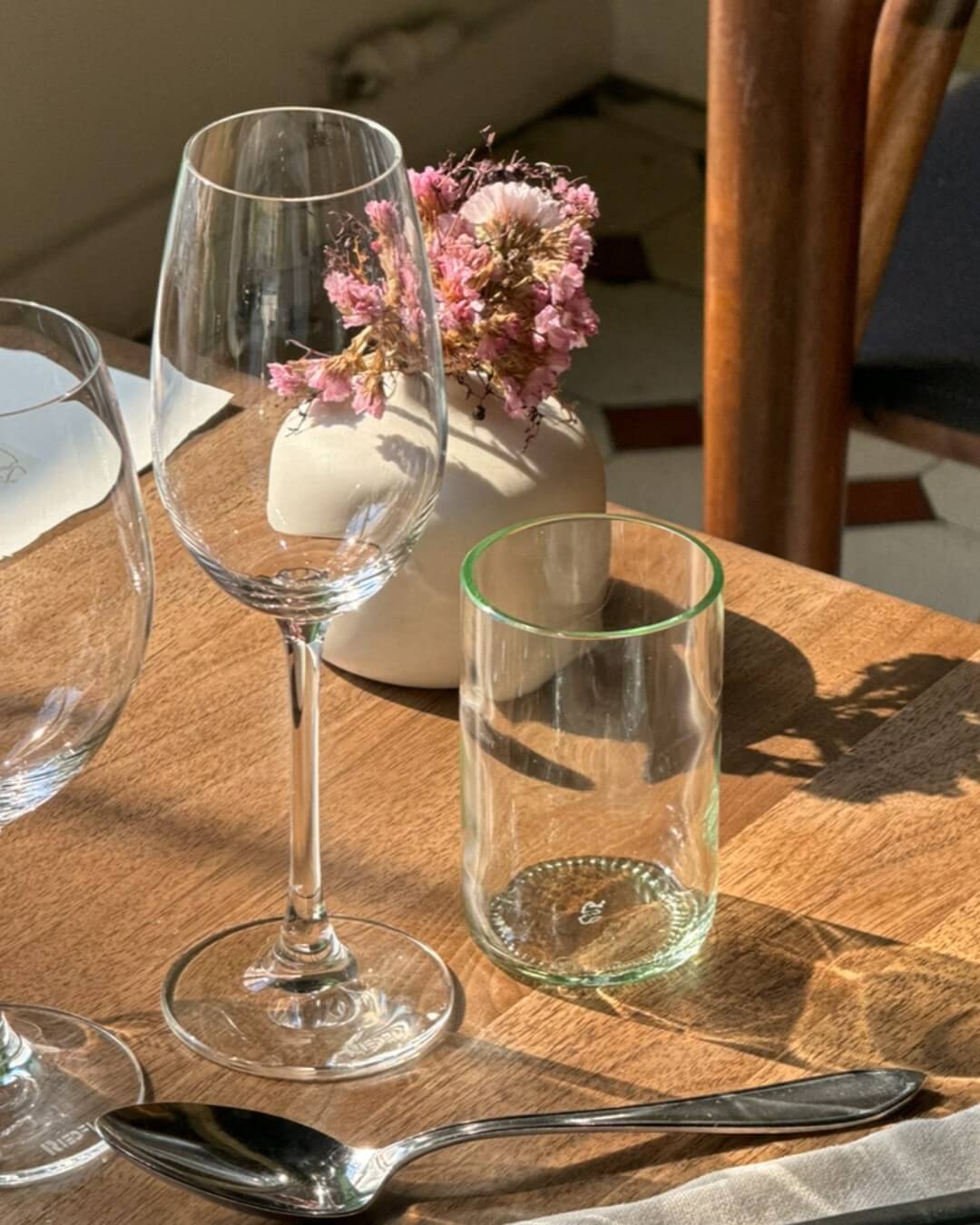
Evolum is a glass-cutting design studio run by Jukka Isotalo in Helsinki. Since the late 1980s, Jukka has explored the environmental side of design and art. His crockery, lamps and sculptures are made from recycled glass bottles, reducing energy and use of resources while giving each piece a new life. At Nolla, our water glasses are his design — upcycled from old beer and soda bottles, with the transformation subtle enough that you only notice if you look closely.
-
Website
Hongola Gård, owned by the Furuhjelm family, is an organic livestock farm in Urjala. The farm has reared cattle for over 300 years on the estate’s forest pastures, and still today the cows are permitted to move around these areas freely between spring and autumn. In 2017 the family introduced Black Angus cows, a Scottish breed, which are fed only naturally grown field grass. That means that the meat is formally classified as “grass-fed beef”. The farmhouse itself dates back to the 1600s, and is said to have inspired the Under the North Star trilogy by Väinö Linna, whose mother worked in the house. Hongola Gård hosts an annual harvest festival with local artisans and producers open for visitors.

-
Website
Noora Karila is a Helsinki-based designer and artist who makes functional ceramic tableware. Her handmade pieces are a celebration of the natural and organic properties of clay, whenever possible making use of Finnish wild clay and colouring oxides. Minimalistic designs and expressive textures are united through both traditional and more experimental techniques. A deliberately slow manufacturing process means Noora carefully considers what gets fired, as well as how to recycle and repurpose leftover clay to minimise waste.
